The deal didn't stall. You lost the frame.
"Let me think about it" is rarely about thinking. It's the sound of a frame you stopped holding three questions ago. Here's how to spot the handover and take it back.

George
12 June 2026 · 3 min read
Building the AI sales manager. Frame State Selling on every live call.
Every rep has a version of the same story. The call felt good. The prospect was nodding. You sent the proposal. Then silence — or worse, a polite "let me take this to the team and circle back."
You log it as a stalled deal. It wasn't. It stalled because somewhere on the call, you handed the frame over and never took it back.
What "the frame" actually means
The frame is who is setting the terms of the conversation. Not the agenda on the calendar invite — the real one: who decides what matters, what counts as a good answer, and what happens next.
When you're leading the frame, the buyer is answering your questions and accepting your read of their situation. When you're chasing it, you're answering theirs, justifying your price, and waiting for permission to move forward.
A buyer who feels the frame slipping doesn't argue with you. They go quiet, get "busy," and disappear into a committee you'll never get on a call.
The dangerous part is that the handover is almost always silent. There's no moment where the prospect says "I'm taking control now." It leaks out in small concessions you don't notice in the moment.
The three places you lose it
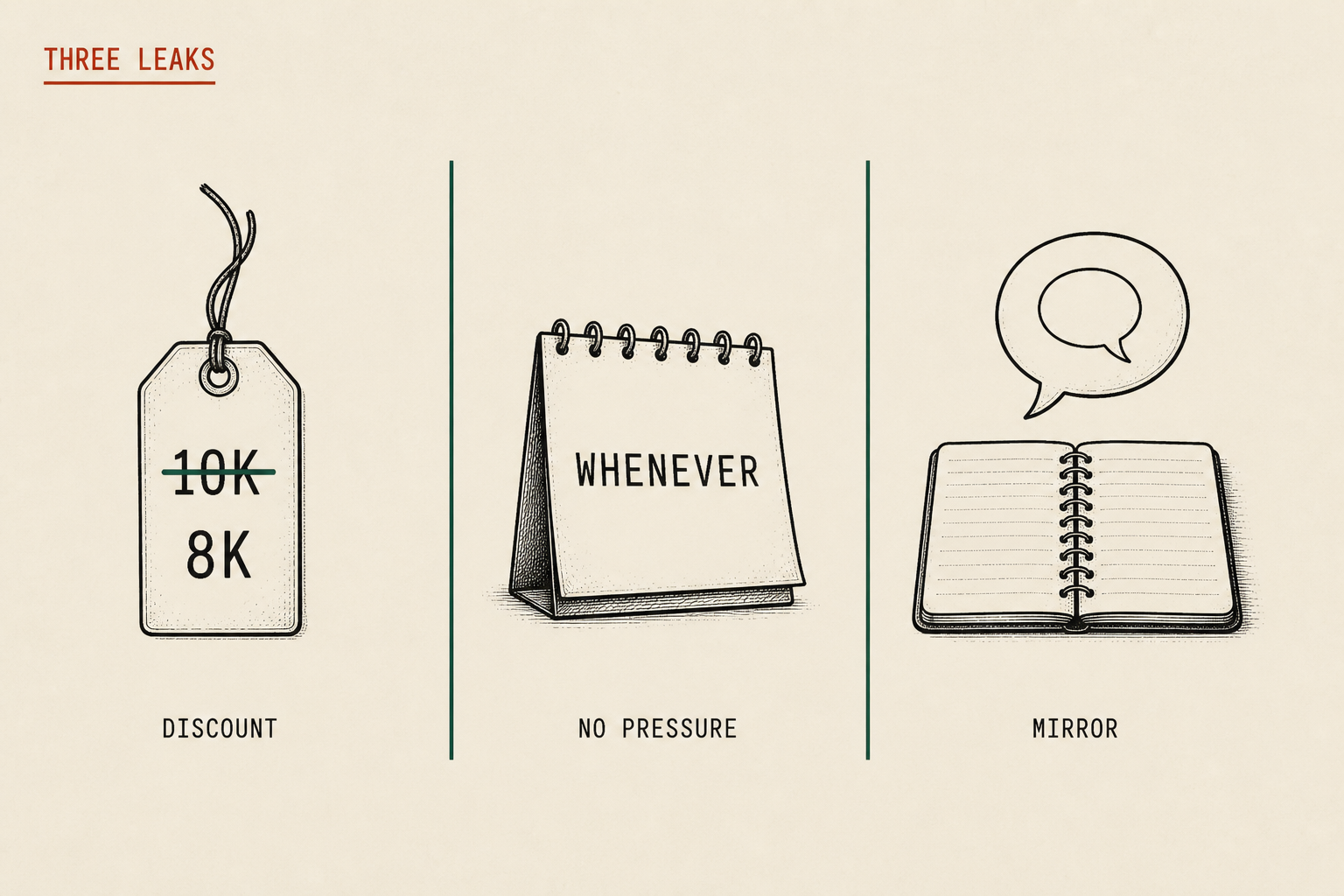
Most frame loss happens in one of three spots:
- The discount you offer before they ask. The second you pre-emptively soften the price, you've told them the number was never real.
- The "no pressure" reflex. "Take all the time you need" sounds generous. It also tells the buyer that moving forward is optional — so they treat it that way.
- The unearned summary. You recap their problem in their words. Now you're a note-taker, not the person who sees something they can't.
| You said | What the buyer heard |
|---|---|
| "Whenever works for you" | "This isn't urgent for me either" |
| "I know budget's tight" | "The price is negotiable" |
| "Does that make sense?" | "Please validate me" |
Taking it back without getting pushy
Reclaiming the frame is not about being aggressive. It's about being the person in the room who is most certain about what the problem costs.
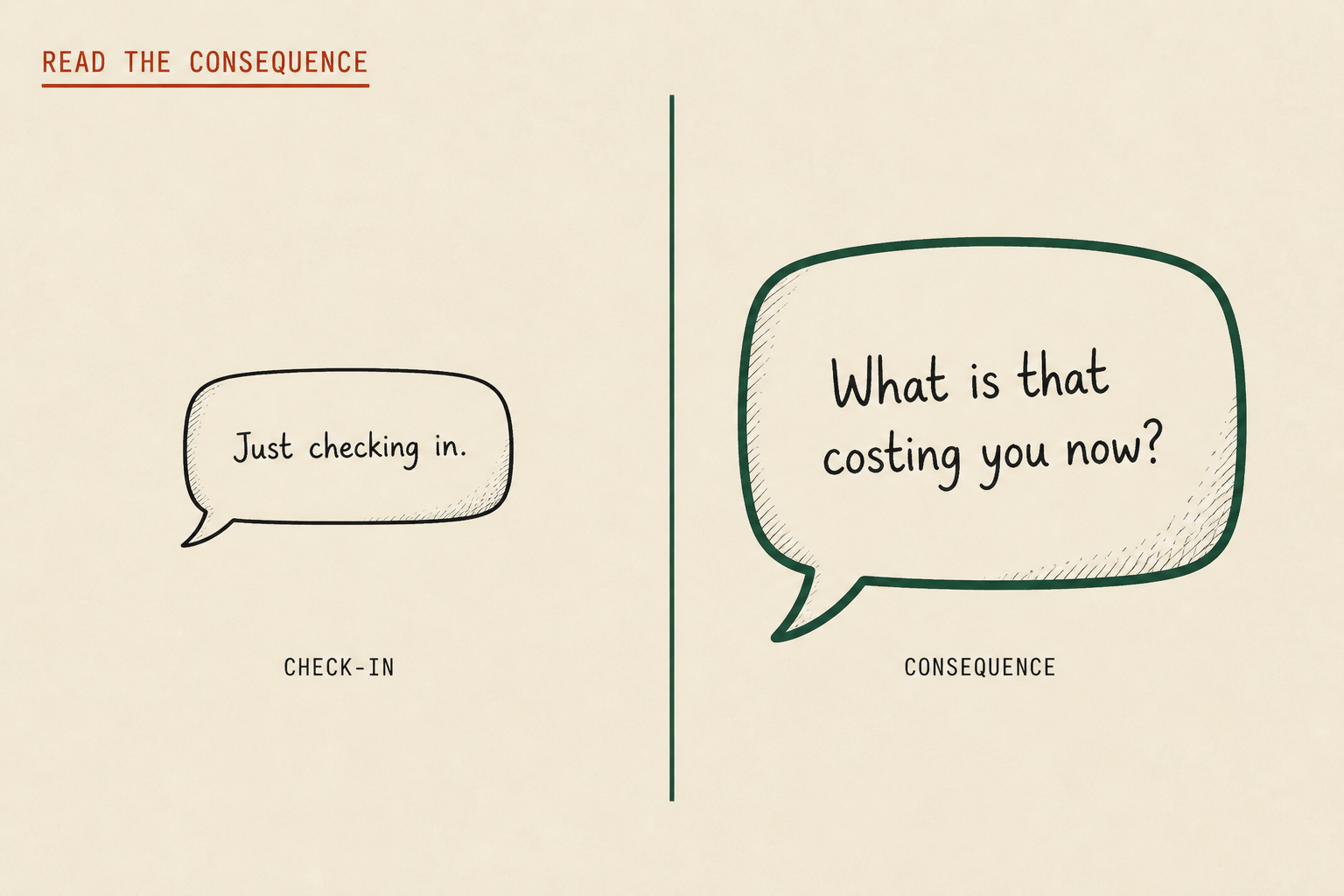
The move is almost always a question, not a statement. When a deal goes quiet, the weak follow-up is "just checking in." The frame-holding follow-up names the consequence:
"When we spoke, you said the inconsistent follow-up was costing you roughly two deals a month. Has that changed, or is it still the bottleneck?"
One reminds them you exist. The other reminds them what waiting costs. Only one of those gets a reply.
Why this is hard to fix alone
Here's the uncomfortable part: you can't see your own frame loss in real time. It happens in the half-second between a buyer's hesitation and your reflex to fill the silence. By the time you're reviewing the call, the moment is gone and the deal is cold.
This is exactly the gap an AI sales manager closes — not by selling for you, but by catching the handover the moment it happens and telling you the specific move to take it back. The rep stays human. The pattern recognition gets a second set of eyes that never blinks.
If your pipeline is full of "good calls" that went quiet, the problem isn't your product or your price. It's that you keep handing back the frame — and nobody's there to tell you the exact moment you do it.
Written by
George
Founder, 1Close
Building the AI sales manager. Frame State Selling on every live call.
Building the AI sales manager. Writes about high-ticket closing, frame, and how founder-led sales teams actually scale.
Frame State Selling® · Frame Intelligence Engine®
Keep reading
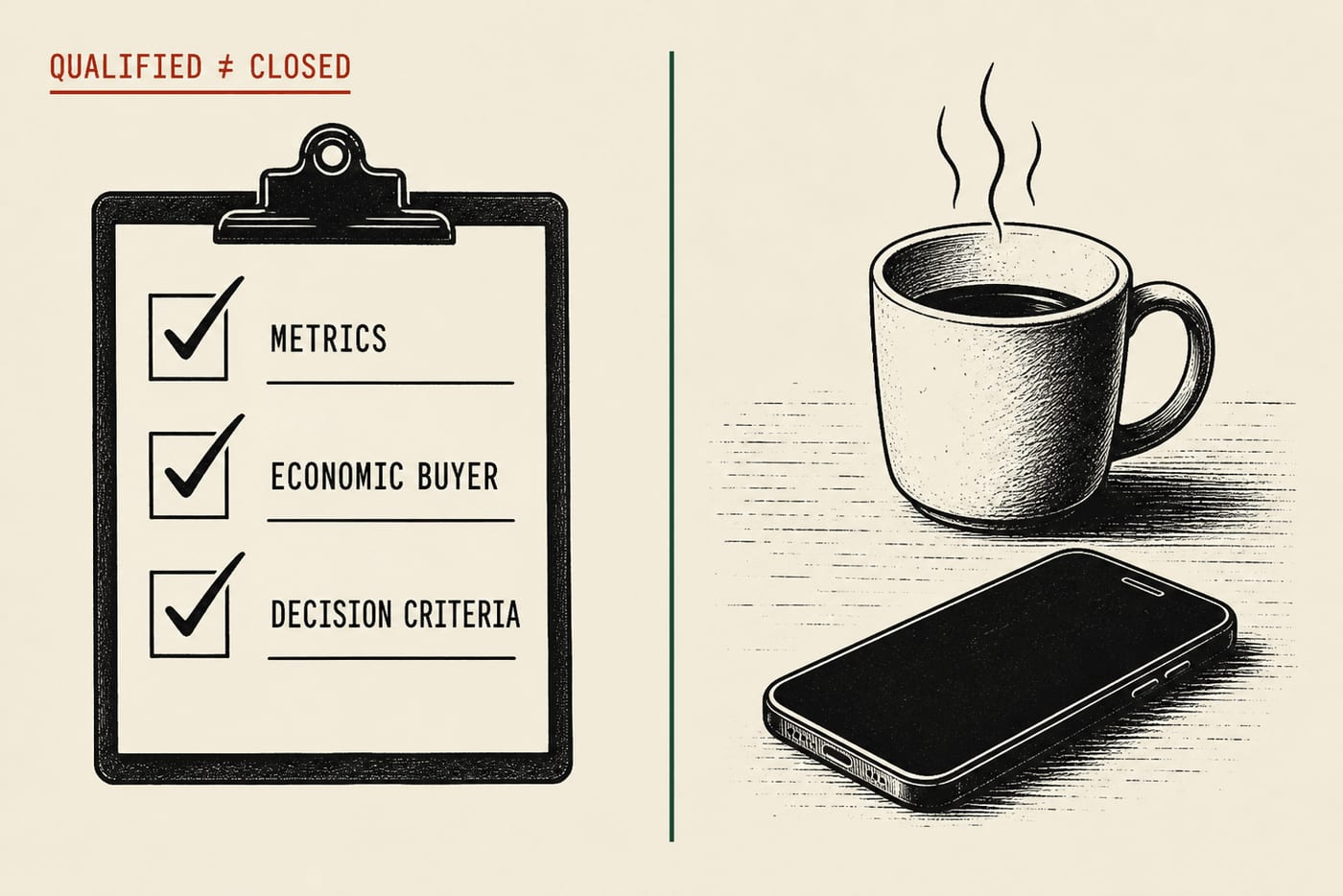
MEDDIC gets qualification right and closes wrong. Here's why.
MEDDIC qualifies the deal. It cannot tell you the frame slipped at 4:32. Founders who stop at the scorecard keep losing deals that were already dead.
8 August 2026 · 8 min read
One un-recovered deal per quarter is next year's sales manager
One should-have-closed deal per closer per quarter is the real cost of losing sales deals nobody totals. Bigger than the sales manager you keep parking.
10 August 2026 · 8 min read